

By Naome Namusoke |KMA Updates
KAMPALA– The Inter-Party Youth Platform (IYOP), a coalition of youth leagues from Uganda’s major political parties, has issued a strong statement following the tragic road crash along the Kampala–Gulu Highway that claimed 46 lives in the early hours of Tuesday, October 22, 2025.
Speaking from the Alliance for National Transformation (ANT) party headquarters in Bukoto, Kampala, where the statement was released, IYOP leaders expressed deep sorrow over the loss of lives, describing the incident as both a national calamity and a painful reminder of Uganda’s broken transport system.
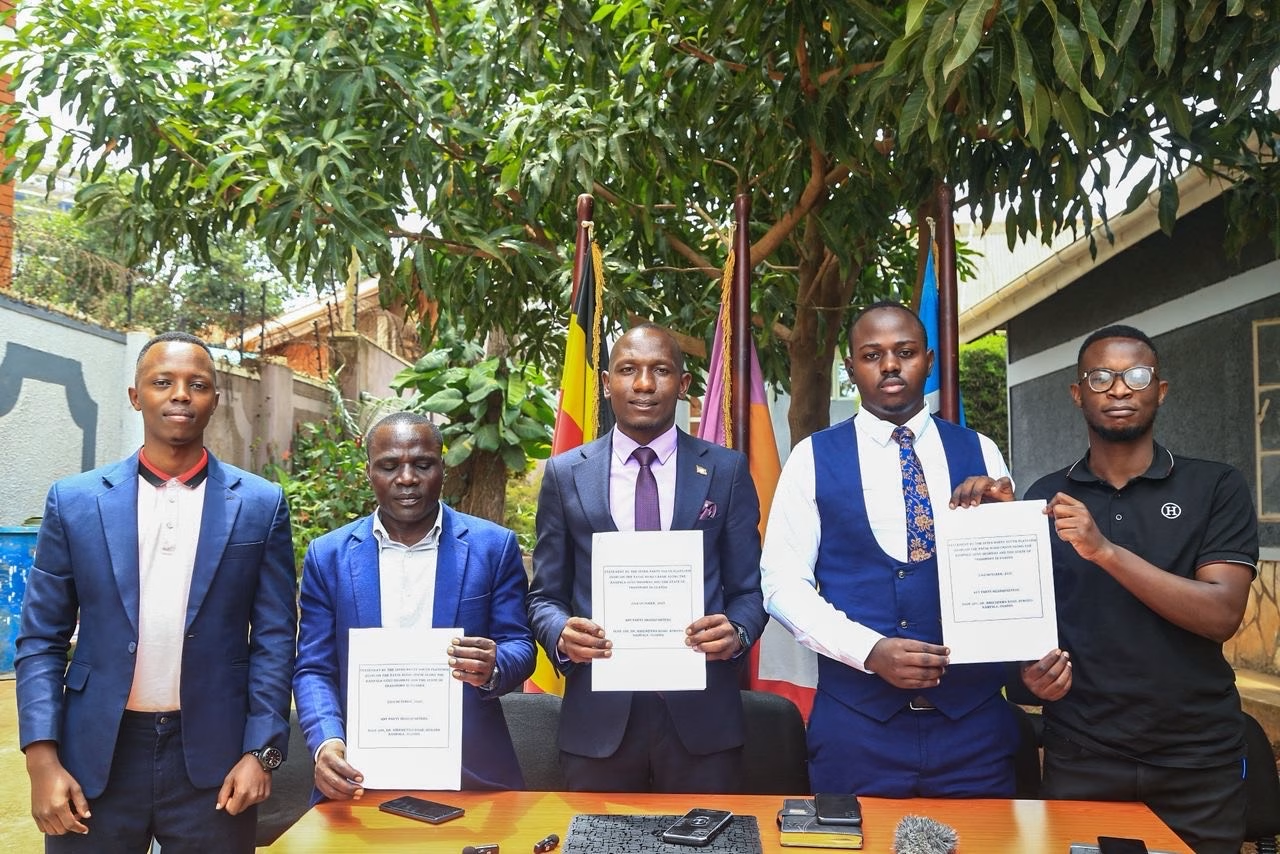
“We join the rest of the nation in expressing our deepest condolences and solidarity with the families, friends, and communities of the 46 Ugandans who tragically lost their lives,” the statement read.
“This heartbreaking event is not just a tragedy it is a symptom of systemic neglect, institutional complacency, and poor planning.”
According to Uganda Police Traffic Directorate data, road crashes claim an average of 14 lives daily making road accidents one of the leading causes of preventable deaths in the country.

IYOP noted that the Kampala–Gulu Highway, first constructed in the 1940s, remains dangerously outdated, narrow, and poorly maintained despite being one of the country’s busiest transport corridors.

“This is not just a crash site; it is a death trap,” the statement reads.
“The Kampala–Gulu Highway lacks overtaking lanes, reflective signage, proper shoulders, and emergency response systems. It symbolizes Uganda’s infrastructure failure.”
The platform blamed corruption, political interference, and poor planning for continued road tragedies, saying that projects are often “driven by political timelines rather than technical priorities,” resulting in substandard construction and rapid road deterioration.

They also criticized the worsening traffic congestion in Kampala and surrounding areas, calling the city’s mobility crisis “a national productivity emergency.”
“Why should a trip to Gayaza take longer than a trip to Dubai?” IYOP questioned rhetorically.
“Our chaotic mobility system dominated by unregulated taxis and boda bodas, with no integrated scheduling, ticketing, or safe pedestrian spaces demands urgent reform.”
The group argued that inefficiency in transport management costs Uganda billions in lost productivity annually, fuels inflation, and worsens air pollution.
To address what it described as “a transport system built on patchwork progress,” the Inter-Party Youth Platform (IYOP) proposed a six-point national transport reform agenda that emphasizes an integrated and multimodal transport system linking road, rail, water, and air networks; urban public transport reforms including light rail, modern buses, cycling lanes, and pedestrian walkways; transparent and sustainable infrastructure financing; stronger road safety and accountability measures; revitalization of rail and water transport; and the declaration of a national day of mourning to honor victims of road crashes.
IYOP urged the Government to immediately conduct a nationwide transport and road safety audit, focusing on high-risk highways and congested urban areas.
The youth leaders also called on the Ministry of Works and Transport to prioritize road safety infrastructure, eliminate corruption in project execution, and strengthen maintenance systems.
Additionally, they demanded that the National Planning Authority revise the National Development Plan (NDP IV)framework to emphasize a truly multimodal, sustainable, and inclusive transport system.
“No nation can claim progress while its citizens continue to die and suffer on its roads,” the youth leaders warned.
“We demand a safe, reliable, and modern transport system one that protects lives, enhances productivity, and prevents tragedies like Kitaleba from happening again.”
The October 22 accident, which occurred around 12:15 a.m. at Kitaleba Village near Asili Farm on the Kampala–Gulu Highway, remains one of Uganda’s deadliest road tragedies in recent years.
It has reignited national debate over road safety, infrastructure standards, and government accountability.