

EC Clarifies Campaign Fundraising Rules for 2026 Polls
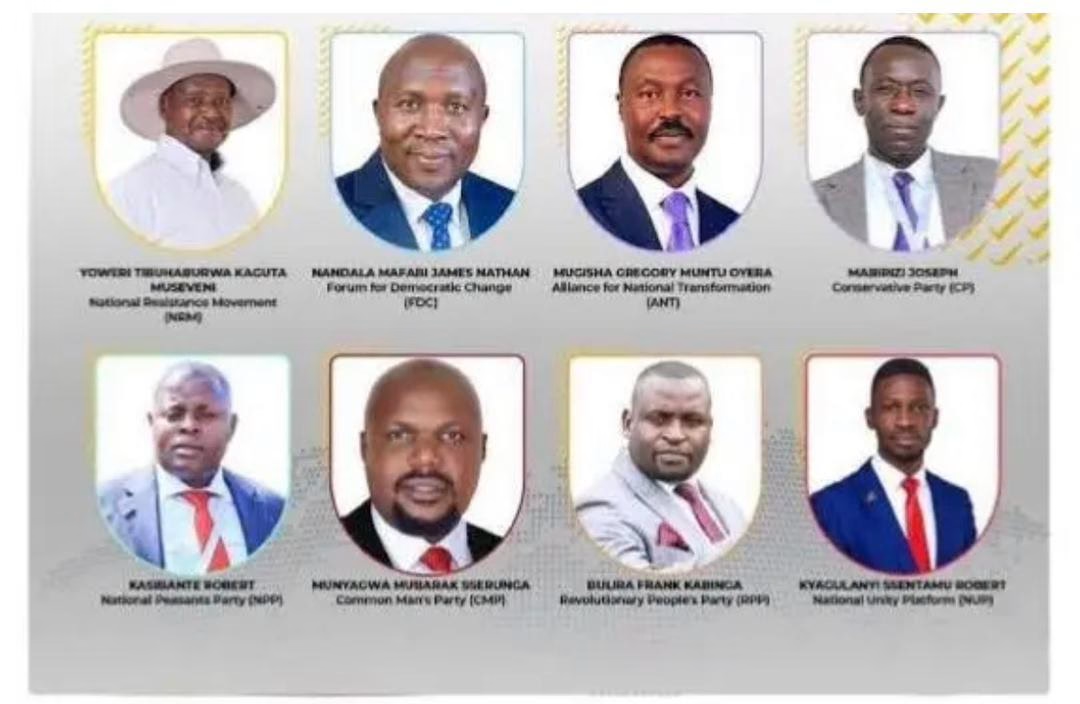 By Naome Namusoke/KMA updates Monday- The Electoral Commission (EC) has issued a clarification on the legality of campaign fundraising for presidential candidates ahead of the 2026 general elections, emphasizing that while candidates are allowed to raise funds, they must do so strictly within the confines of the law.Speaking to the media on Monday, EC spokesperson Julius Mucunguzi said the Presidential Elections Act permits presidential candidates or their agents to solicit and receive financial support, provided that such contributions come from lawful sources. “The Presidential Elections Act allows any presidential candidate or their agent to raise and solicit funds for campaign purposes, as long as this is done in accordance with the law,” Mucunguzi stated. Mucunguzi has also highlighted that the law explicitly bars candidates from receiving funds from foreign governments, institutions, or individuals with interests in destabilizing the country.
“A candidate is not allowed to raise funds from a foreign government or foreign body, or from any person who has declared an intention to overthrow the sitting government,” he emphasized.
Under the Act, all presidential candidates are required to keep comprehensive records of the financial assistance they receive and submit a full report to the Electoral Commission within 30 days after the election, detailing all campaign funding sources.Failure to comply with these requirements is a criminal offense punishable by up to five years in prison and a fine of 120 currency points which is equivalent to UGX 2.4 million (since one currency point equals UGX 20,000).The clarification comes amid growing reports of presidential hopefuls facing financial strain as campaigns approach. Maj. Gen. (Rtd) Mugisha Muntu, the presidential flagbearer for the Alliance for National Transformation (ANT), has launched a grassroots fundraising drive, calling on Ugandans to take ownership of their political future.“We want Ugandans to fund their own politics,” Muntu said. “If citizens contribute to our campaign, we shall remain accountable to them not to shadowy donors.”Muntu added that the Electoral Commission does not fund presidential candidates, except for providing official escorts and security vehicles.
“The EC doesn’t fund us. They only provide police escorts and security. Everything else, including fuel, transport, and accommodation, comes from the candidates themselves,” he noted.Another aspirant, Mubarak Munyagwa, representing the Common Man’s Party, also decried financial challenges during his campaign trail.“We are running on empty,” Munyagwa admitted during a rally in Jinja last week. “But our strength is in the people — not in the pockets of a few foreign funders.”
His party has since rolled out community fundraising drives and online donation platforms, urging supporters to contribute directly to sustain their campaign efforts.Meanwhile, National Unity Platform (NUP) candidate Robert Kyagulanyi Ssentamu, popularly known as Bobi Wine, continues to face government scrutiny over alleged foreign financial backing.State officials have repeatedly accused him of receiving support from “foreign elements” opposed to the government allegations the NUP leadership has firmly dismissed as politically motivated.“All our support comes from Ugandans at home and abroad who believe in change,” Bobi Wine said in a recent interview. “We operate within the law, and we shall declare every source of support to the Electoral Commission.”
EC Emphasizes Transparency and Accountability
Mucunguzi reaffirmed that the EC is closely monitoring campaign financing compliance and will not hesitate to penalize violators.
“The law is clear. Every candidate must declare the assistance they receive. The Commission will not hesitate to act where violations are proven,” he warned.
He underscored that transparency in campaign financing is vital to ensuring integrity and public trust in Uganda’s democratic process.
“Campaigns should be financed openly and accountably. Citizens deserve to know who is funding their leaders,” Mucunguzi added.
Background Statistics
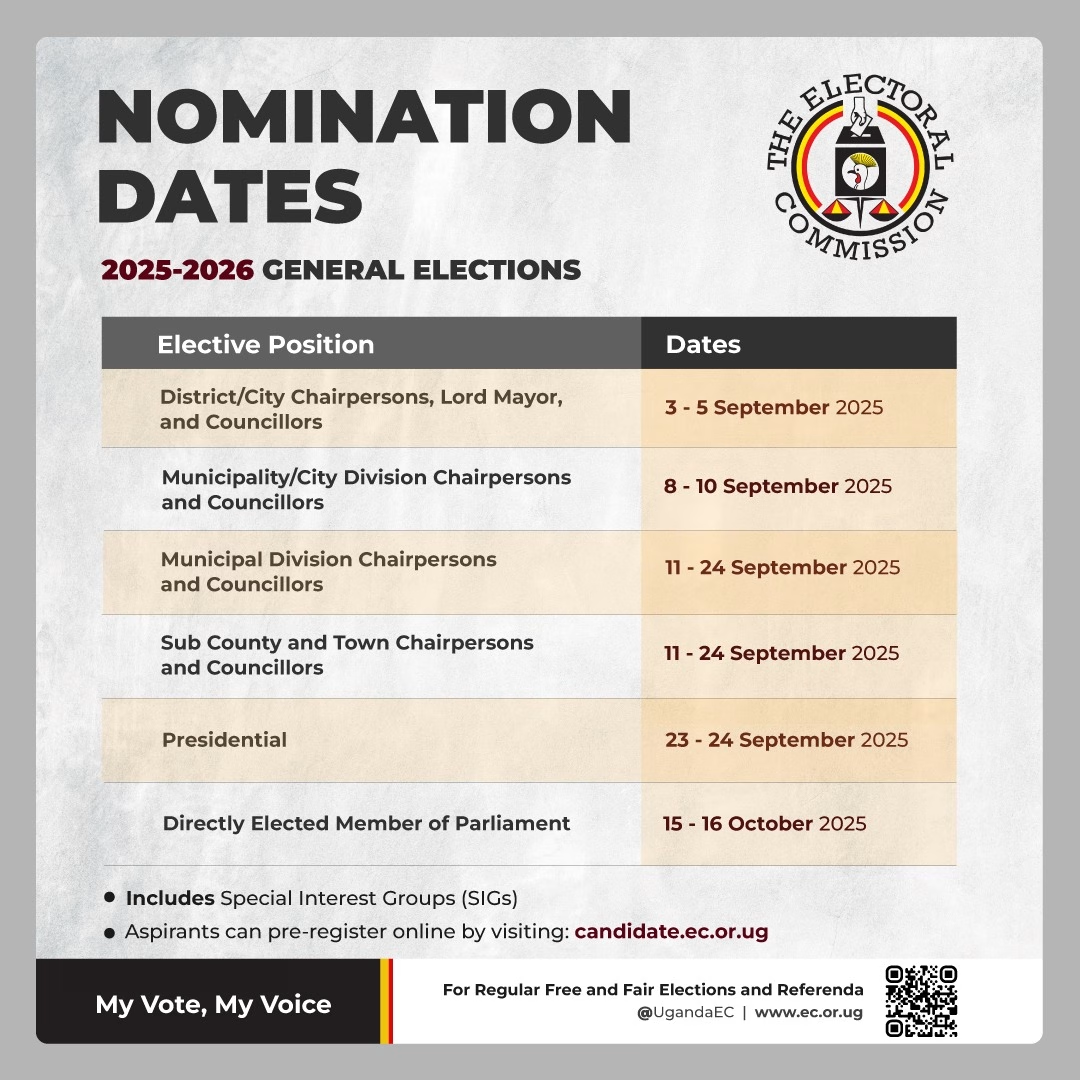
- Uganda currently has eight presidential aspirants cleared to participate in the 2026 elections, slated for January 2026.
- According to the EC’s 2021 post-election report, over UGX 600 billion was spent nationwide during the last general elections, with campaign financing transparency flagged as one of the key electoral integrity concerns.
- A 2023 Afrobarometer survey indicated that 68% of Ugandans believe campaign funding influences political decisions, while only 27% feel there is sufficient transparency in how parties finance their activities.