

EABC Launches Investment Summit to Tackle Regional Integration Challenges.
By Namusoke Naomi | KMA updates
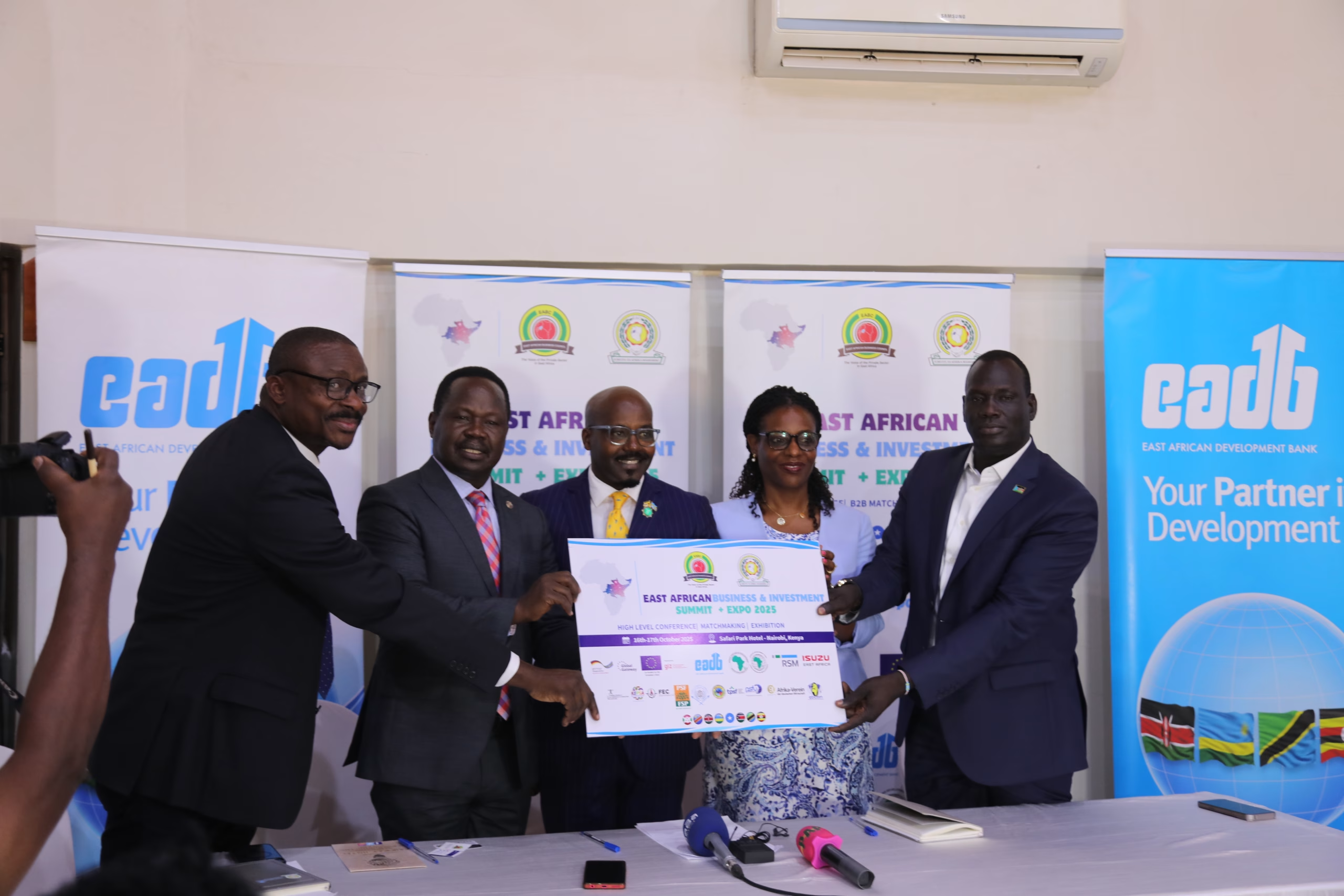
The East African Business Council (EABC) has officially launched the East African Business and Investment Summit 2025, aimed at addressing critical barriers to regional integration and strengthening the bloc’s position within the African Continental Free Trade Area (AfCFTA) framework.
Despite years of progress, the East African Community (EAC) continues to grapple with key structural and policy challenges, including non-tariff barriers, poor infrastructure, divergent national policies, and limited institutional capacity, which have slowed down the region’s transformation into a fully integrated economic bloc.

With a combined Gross Domestic Product (GDP) of USD 305 billion, the EAC remains one of Africa’s most promising regional economies. Uganda continues to play a central role as a regional economic engine. However, experts warn that unless internal trade barriers and market access issues are resolved, the region may continue to fall short of its integration goals.
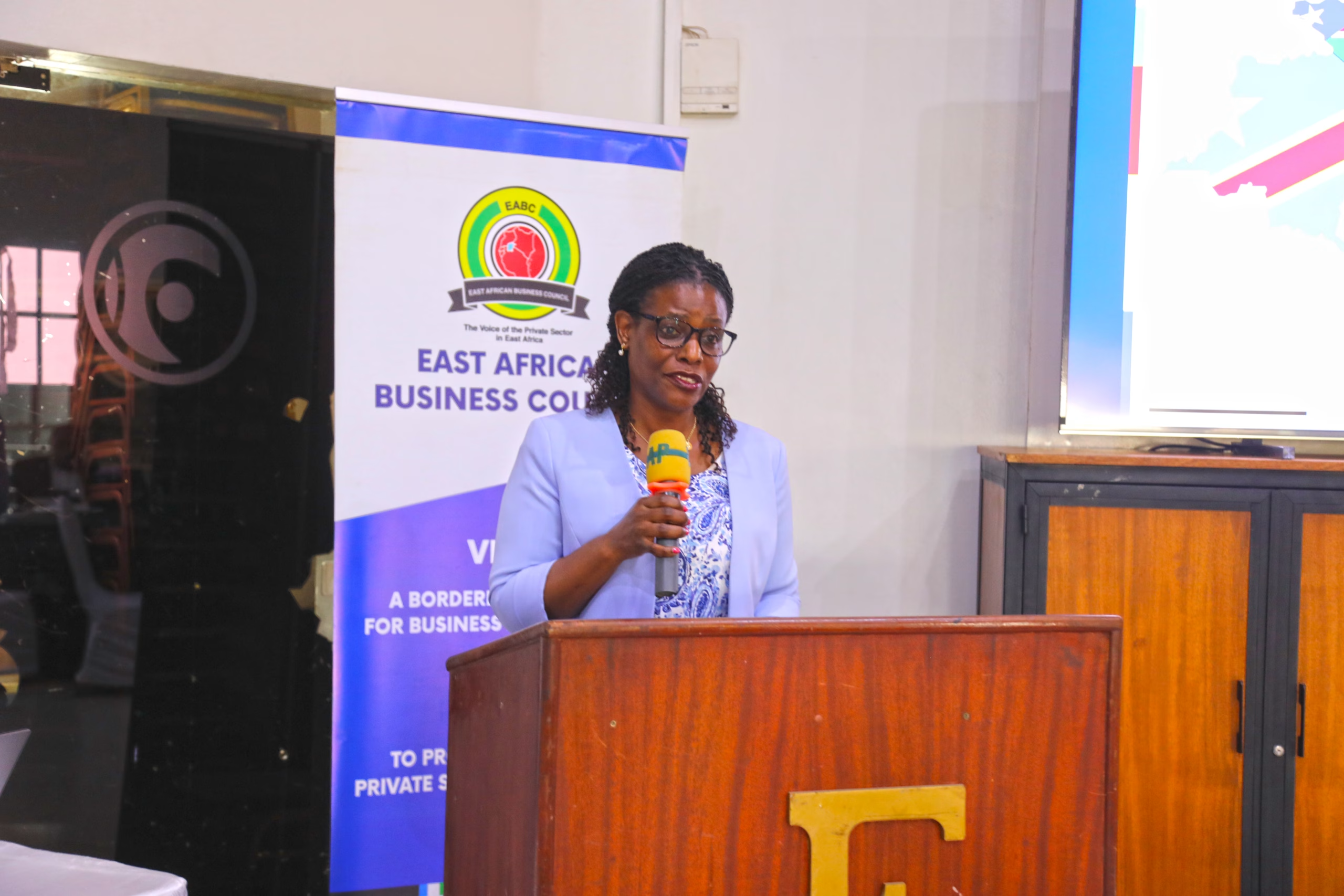
Annet Ssemuwemba, Deputy Secretary General of the EABC, has acknowledged that while the AfCFTA offers significant potential for expanded trade and investment, its implementation within the EAC has been slow.
“One of the biggest hurdles is the continued presence of non-tariff barriers, which delay the movement of goods across member states,” Ssemuwemba said.
She has also noted that limited public awareness about AfCFTA remains a concern. In response, the EABC is intensifying efforts to sensitize businesses and deploy new technologies to boost trade facilitation and market connectivity.
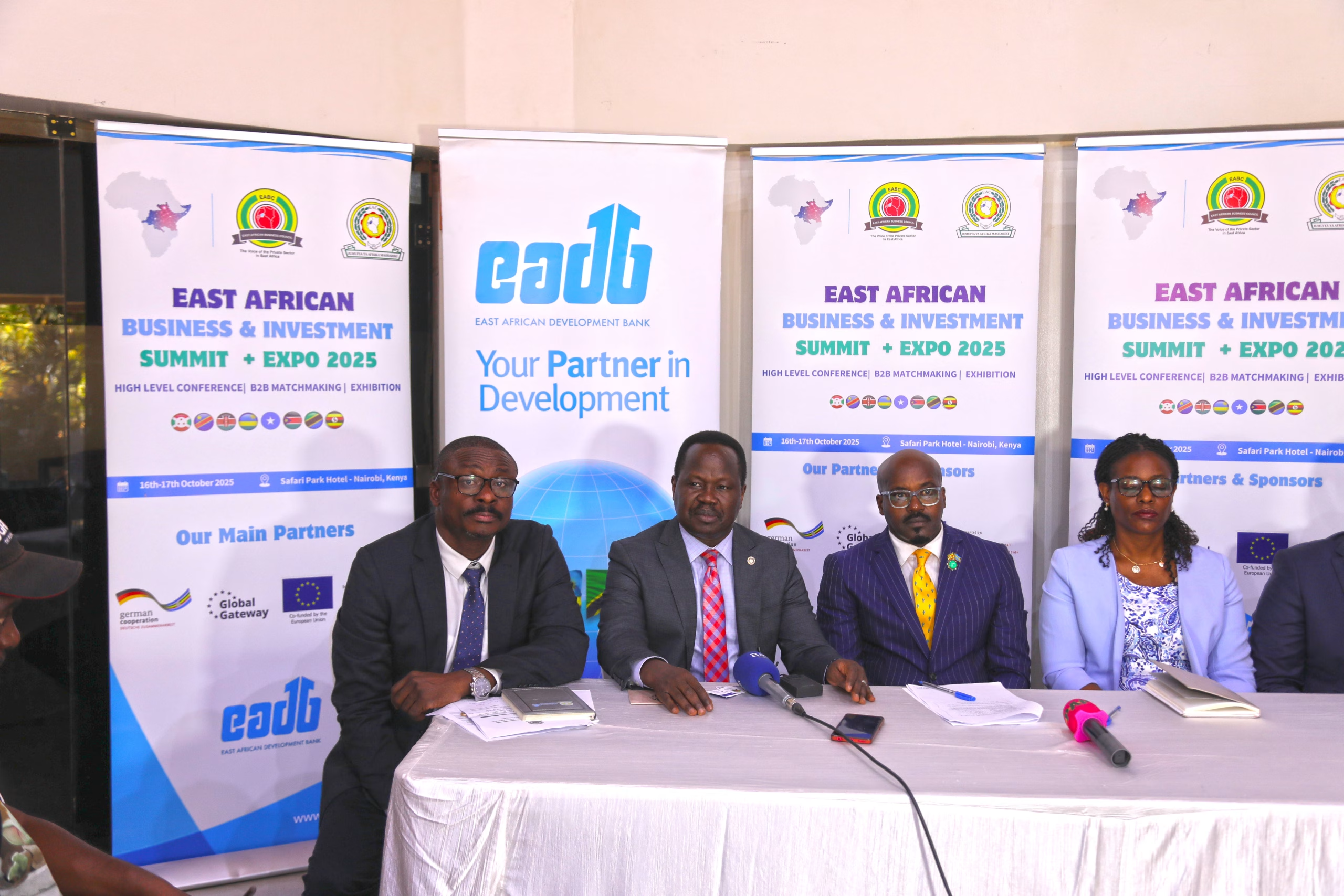
To tackle these issues head-on, the East African Business and Investment Summit 2025 will take place from October 16th to 17th at Safari Park Hotel in Nairobi, Kenya. According to Adrian Njau, CEO of the EABC, the biennial event is expected to bring together over 600 business leaders, policymakers, and investors from across Africa.
“This year’s summit will feature B2B meetings, investment dialogues, and an exhibition of cutting-edge technologies from the European Union,” said Njau. “We aim to create actionable partnerships that boost trade in sectors like manufacturing, ICT, and services.”
Speaking during the launch, Francis Ogwanga, Country Manager of the East African Development Bank (EADB), reaffirmed the institution’s commitment to financing regional growth in key areas.
“We are dedicated to supporting development in ICT, manufacturing, and regional infrastructure to foster sustainable integration and economic progress,” Ogwanga noted.
Despite the persistent barriers, intra-EAC trade has shown positive momentum. Trade within the region grew from USD 3.4 billion in 2023 to USD 5.4 billion in 2024, while trade with other African countries rose from USD 6.1 billion to USD 9.5 billion in the same period.
Analysts attribute this growth to improved customs practices, enhanced logistics, and increased private sector engagement. However, stakeholders stress that more needs to be done to remove the non-tariff barriers and harmonize cross-border policies.
Oscar Kamukama, EABC Board Director for Uganda, outlined some of the priority areas that will be addressed during the summit, including policy coordination, regional infrastructure, digital transformation, and investment readiness.
“This summit is about turning dialogue into action. We’re focusing on what needs to be fixed policy gaps, transport networks, and awareness so East Africa can compete effectively in continental and global markets,” Kamukama said.
As the countdown to the Nairobi summit begins, the message from the EAC business community is clear: regional unity, market openness, and strategic investment are critical to achieving lasting integration and prosperity under the AfCFTA era.