

By Naome Namusoke/KMA Updates
KAMPALA — In a decisive move to address mounting concerns from the private sector, key players in Uganda’s business community have joined forces with government representatives to discuss the country’s deteriorating business climate, following the release of the Business Climate Index (BCI) for the second quarter of 2025.
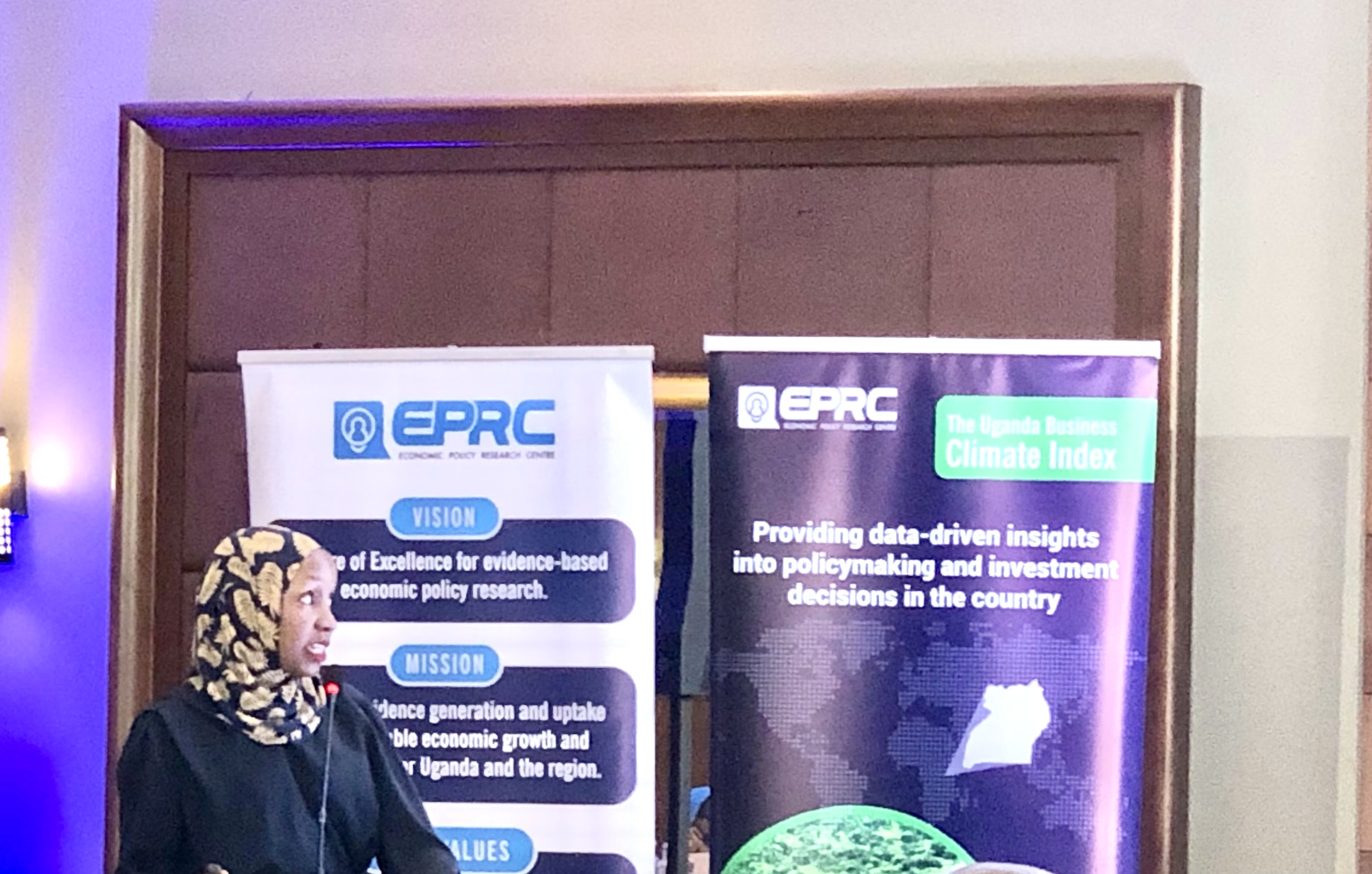
The high-level workshop, held at Sheraton hotel in Kampala under the theme “Perceptions of Doing Business in Uganda”, has brought together officials from the Economic Policy Research Centre (EPRC), Uganda Electricity Distribution Company Limited (UEDCL), Uganda Revenue Authority (URA), Uganda Registration Services Bureau (URSB), Ministry of Trade, Kampala City Traders Association (KACITA), and commercial officers from various municipalities. The stakeholders zeroed in on the pressing issues flagged in the Q2 BCI report namely electricity disruptions, burdensome taxes, and widespread informality in business operations.
Electricity supply challenges dominated the discussion, with many businesses citing persistent blackouts and unstable connections as a key hindrance to operations. The problem, stakeholders say, has worsened since the transition of power distribution from Umeme to the government-owned UEDCL.
Speaking during the event, Paul Mwesigwa, Managing Director of UEDCL, admitted that the transition came with “a massive inherited backlog from Umeme” that will take at least two months to clear. He added that while UEDCL has already procured critical equipment to address the crisis, full stabilization of power supply across the country may take between 9 to 12 months.
“We expect the new equipment to arrive within six months. In the meantime, we’re prioritizing high-impact areas and working closely with communities to restore stable distribution,” said Mwesigwa.
He further revealed that Uganda’s electricity access rate stands below 30%, significantly lower than Kenya’s 70%, noting a clear regional disparity in energy infrastructure development.
“We are lagging behind and must accelerate investments in the power grid and rural electrification,” he said.
The introduction of “bulky meters” has sparked outrage among traders in Kampala’s central business district, particularly those operating in arcades. Issa Sekitto, spokesperson for KACITA, said the new metering system is disrupting operations and complicating billing for small and informal businesses.
“Power sharing has become chaotic. Traders in arcades are confused about usage and billing because the system is not tailored for multiple users,” Sekitto explained.
In response, UEDCL defended the system, stating it was part of efforts to curb electricity theft. However, Mwesigwa acknowledged the concern and said the utility is engaging meter manufacturers to introduce more efficient and user-friendly alternatives in the near future.
Beyond energy challenges, the BCI report also revealed that high taxes remain a significant burden, particularly in upcountry municipalities. Beatrice Namono, a commercial officer from Mbale City, highlighted grievances over property tax and its effect on SMEs and real estate investors.
“We are pushing for a review of some of these taxes. In Mbale, the property tax has triggered protests, especially among startups and youth-owned enterprises,” Namono said.
Timothy, a tax education officer from URA, urged businesses to improve their tax compliance by understanding regulations and maintaining proper financial records.
“Many penalties arise from ignorance. We encourage businesses to engage with our regional offices and digital platforms to get tax education,” he noted.
Another recurring theme was Uganda’s deeply informal business landscape. Eng. Byaruhanga Deo, Assistant Commissioner at the Ministry of Trade and Cooperatives, has pointed out that many businesses appear formal outwardly but operate informally, dodging taxes and bypassing regulatory frameworks.
Kizza Zeuse, a registration officer from URSB, emphasized the importance of formalization for business growth, access to finance, and legal protection.
“Formal businesses enjoy a range of benefits — from government grants to affordable credit. Informality keeps businesses stuck at the micro level,” said Zeuse.
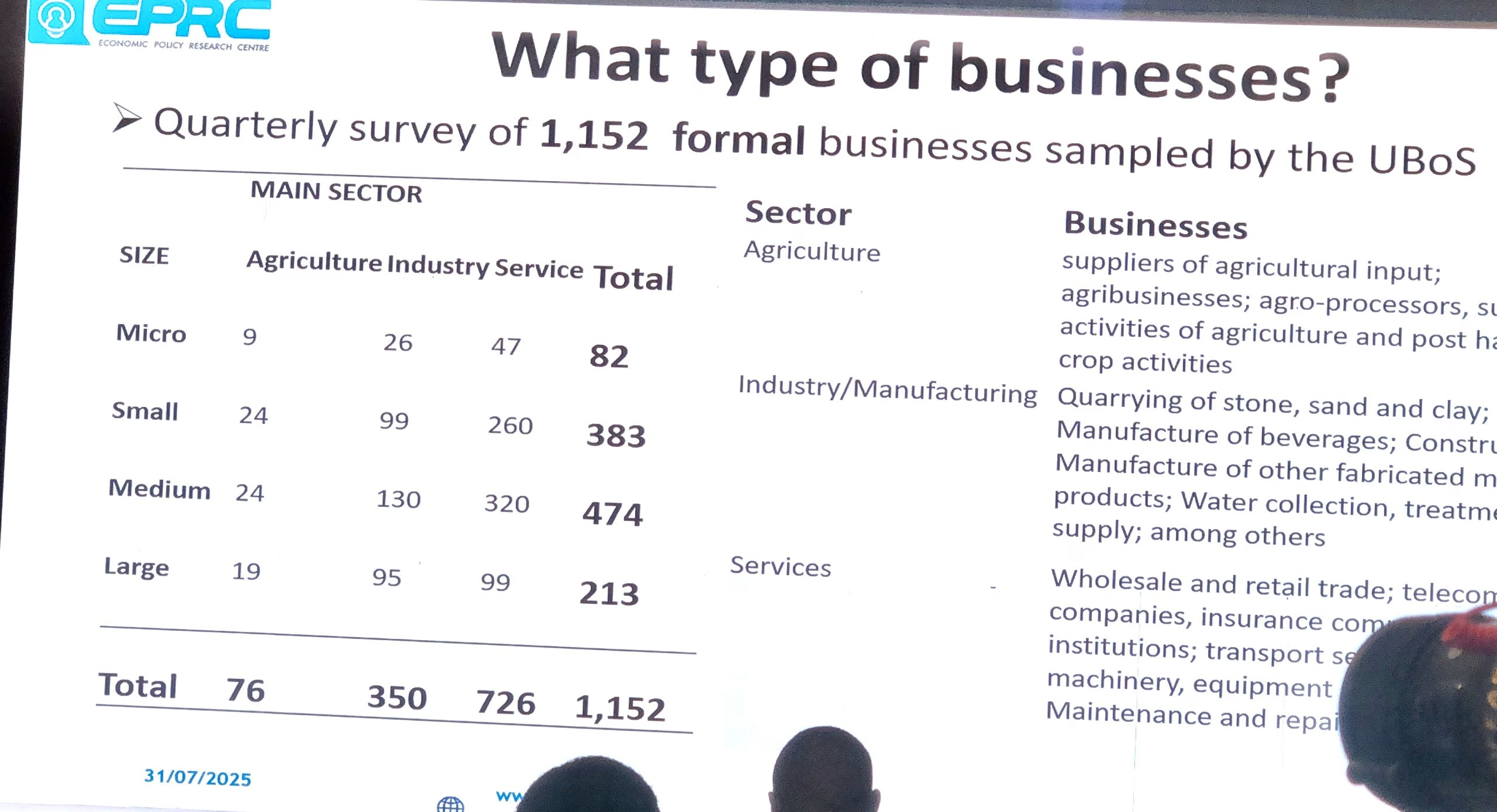
According to the Q2 2025 Business Climate Index, Uganda scored 92.5, a slight rise from Q1 but still below the neutral benchmark of 100 signaling that business sentiment remains cautious. The agriculture and manufacturing sectors recorded slight declines due to weather shocks and energy instability, while services and trade displayed modest resilience.
Despite the challenges, the collaborative tone of the workshop suggested a shared commitment to reversing negative trends. The EPRC said insights from this engagement will feed into policy recommendations aimed at improving the ease of doing business in the months ahead.
As the country gears up for Q3, the business community remains hopeful that continued dialogue with government, along with targeted reforms in power and tax systems, will pave the way for stronger economic performance.