

By Naome Namusoke/ KMA Updates
Kampala, Uganda — The Electoral Commission (EC) has today conducted a public practical demonstration of the newly introduced Biometric Voter Verification Kits (BVVKs), a key technological intervention set to be deployed during the 2026 General Elections. The exercise, held at the Commission’s headquarters in Kampala, was presided over by the Deputy Chairperson of the Electoral Commission, Hajjati Aisha Lubega, and aimed at enhancing public confidence in the electoral process.
The demonstration featured a real-time simulation of a future polling station, where registered voters and journalists participated in a mock voting exercise. The simulation showcased how the biometric devices will be used to verify voters and ensure that only eligible voters cast a single ballot at their designated polling stations, as part of efforts to curb ballot stuffing and electoral fraud.
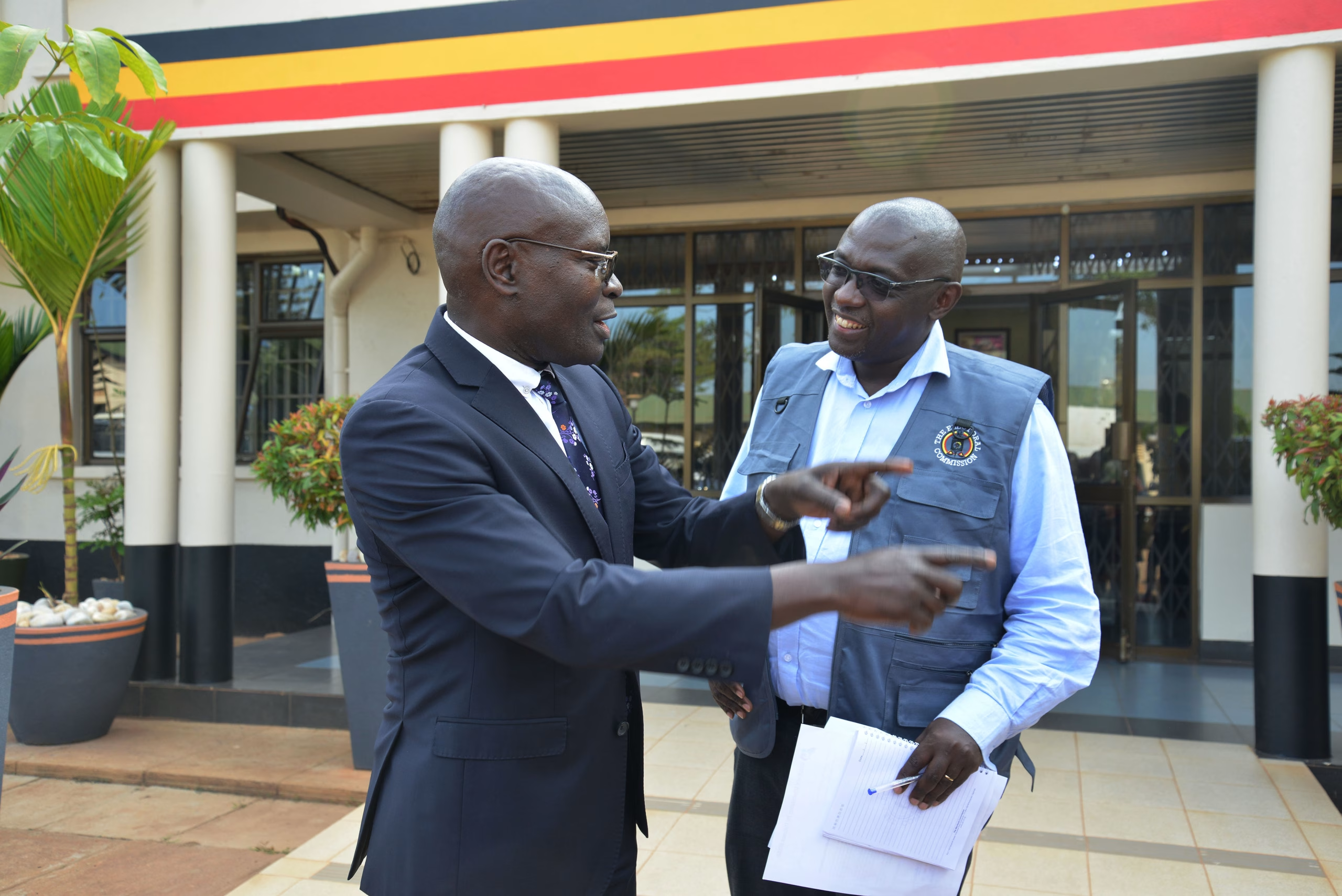
As part of preparations for credible, accurate, transparent, and integrity-based elections, Uganda’s Independent Electoral Commission has procured approximately 109,142 improved Biometric Voter Verification Kits. The handheld electronic devices are designed to authenticate voters by matching their biometric data including fingerprints and facial features with information stored in the national voter register.
According to the Commission, the upgraded BVVKs represent a significant improvement in voter verification technology, aimed at eliminating impersonation, multiple voting, and the issuance of fake ballot papers.
Despite the intended benefits, the introduction of biometric voter verification has been met with skepticism and concern from sections of the public, some of whom fear that the technology could instead facilitate ballot stuffing or cause delays at polling stations.
These concerns prompted the Commission to organise the public demonstration, giving stakeholders an opportunity to witness firsthand how the devices operate and how safeguards have been integrated into the system.
During the demonstration, trained Electoral Commission officials verified voters by scanning their fingerprints using the BVVKs. In cases where fingerprints were defaced or unreadable, facial recognition technology was used as an alternative means of identification.
Once a voter was successfully verified, the BVVK operator scanned the ballot paper corresponding to the specific electoral category before issuing it to the voter. This step ensures that only authentic ballot papers are issued and directly links each ballot to a verified voter, further preventing ballot stuffing.
In situations where an individual was either not registered or appeared at the wrong polling station, the biometric device automatically rejected the verification and directed the individual to their correct polling location.
The Commission noted that the entire verification and authorization process is designed to take no more than one minute per voter, a measure intended to minimise delays and congestion at polling stations on election day.
Beyond voter verification, the BVVKs are also equipped with features that support results management and transmission. At the close of polling, election officials will enter results into the Declaration of Results (DR) forms, which are then authenticated, scanned, and photographed using the devices.
The authenticated DR forms are subsequently transmitted electronically to the Commission’s central tallying system, providing a digital backup for Returning Officers. This system allows for cross-checking and validation against physical results submitted to tally centres, particularly in cases where results are disputed.
Speaking after the demonstration, Deputy Chairperson Hajjati Aisha Lubega described the introduction of the BVVKs as a major milestone in the Commission’s electoral reforms.
“This is a significant achievement in our efforts to uphold the principle of one person, one vote. The BVVKs will help us deliver a more credible, transparent, and trusted electoral process in 2026.”
Some voters who participated in the demonstration welcomed the new system, noting that it reduces opportunities for multiple voting and is time-efficient compared to previous verification methods.
However, others maintained cautious optimism, urging the Commission to ensure adequate training of polling officials and reliable power backups to guarantee smooth operations on election day.
In the same engagement, Hajjati Lubega announced adjustments to polling dates for Special Interest Groups (SIGs) at both parliamentary and local government levels. The changes are intended to enable members of these groups to fully participate in universal adult suffrage during the general elections, while also taking part in their respective electoral college elections without conflict.
The Commission also revealed that it has embarked on the issuance of voter location slips, a process that began on December 15. According to the Deputy Chairperson, registered voters can collect their slips free of charge from their respective parishes across the country until January 30 next year.
As preparations for the 2026 General Elections intensify, the Electoral Commission says it remains committed to leveraging technology, transparency, and public engagement to deliver elections that reflect the will of the people of Uganda.