

By Naome Namusoke/KMA Updates
The Uganda Media Women’s Association (UMWA), in partnership with the United Nations Development Programme (UNDP) and other partners has launched the Gender Media Awards Campaign, an initiative aimed at recognizing and motivating journalists who go the extra mile in reporting stories related to gender-based violence (GBV), sexual and reproductive health, and refugee rights.
The launch, held at their office in Kisaasi, highlighted the need to strengthen gender-sensitive reporting in Uganda’s media landscape. According to UMWA, while significant progress has been made in covering issues of violence against women, glaring gaps remain in how survivors’ voices are represented in the media.
Joanita Nankya Sanyu, Programs Officer at UMWA, cited findings from a 2019 UMWA study which revealed that 90% of sources quoted in GBV-related stories were men, yet the majority of survivors were women. This mismatch, she has noted, shows a critical imbalance in storytelling and underscores the urgent need to amplify women’s perspectives in the fight against GBV.
“Journalists play a pivotal role in shaping narratives. If the majority of voices heard are male, while the majority of those affected are women, then we risk silencing the very people whose experiences should be at the centre of these stories,” Nankya emphasized.
It is against this backdrop that the Gender Media Awards were established. The awards will not only recognize excellence in reporting but also motivate journalists to embrace gender-responsive journalism and raise awareness among the public and policymakers about the realities of GBV and other gender-related challenges.
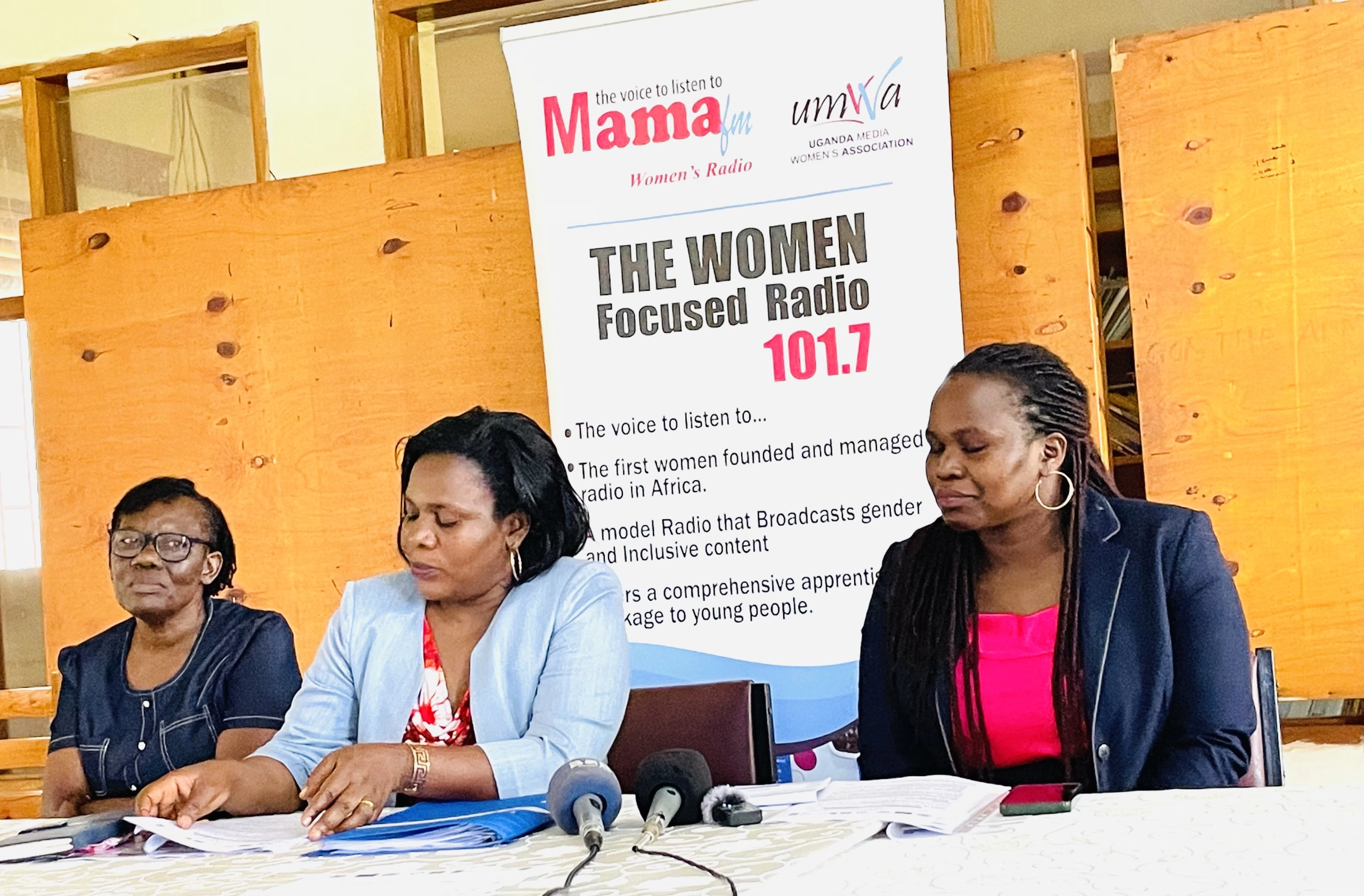
The awards will be based on stories published or aired between August 1, 2025, and October 15, 2025, with winners publicly announced in November 2025.
Organizers stressed that gender-sensitive reporting is particularly critical during sensitive times such as national elections, when cases of GBV tend to spike. By celebrating journalists who highlight these issues responsibly, the awards are expected to foster more inclusive and accountable media practices.
For UMWA, the campaign is more than just an award ceremony; it is a statement of intent. “By launching these awards, we are reaffirming that gender-sensitive reporting matters. It is about giving survivors a platform, challenging stereotypes, and ensuring that the media becomes a true ally in the struggle for gender equality,” Nankya added.
Uganda continues to grapple with high rates of gender-based violence, with reports from the Uganda Bureau of Statistics indicating that at least 56% of women aged 15–49 have experienced some form of violence in their lifetime. Advocates believe that the media, when used responsibly, can play a powerful role in reversing these trends.
With the launch of the Gender Media Awards, UMWA, UNDP and partners hope to set new benchmarks in storytelling where women’s voices are not just included but are placed at the heart of national conversations on justice, equality, and human rights.