

By Naome Namusoke/KMA Updates
Uganda’s annual inflation rate for August 2025 held steady at 3.8 percent, the same level recorded in July, according to the latest figures released by the Uganda Bureau of Statistics (UBOS).
UBOS attributed the stable trend to a mix of rising costs in some service sectors and easing prices in key food items.
Transport inflation edged up to 3.0 percent in August from 2.5 percent in July, reflecting higher transport-related costs. Similarly, restaurants and accommodation services registered inflation of 5.6 percent, compared to 5.0 percent the previous month. Insurance and financial services saw the sharpest increase, rising to 16.4 percent in August from 15.7 percent in July.
On the other hand, goods inflation slowed to 3.2 percent, down from 3.7 percent in July. UBOS data shows that the decline was driven by lower price changes in essential food items. Rice inflation dropped to 4.1 percent, from 7.3 percent in July.
Dried fish recorded a negative price change of -5.7 percent, compared to 2.0 percent previously. Maize inflation decreased to 11.5 percent, from 13.8 percent in July.
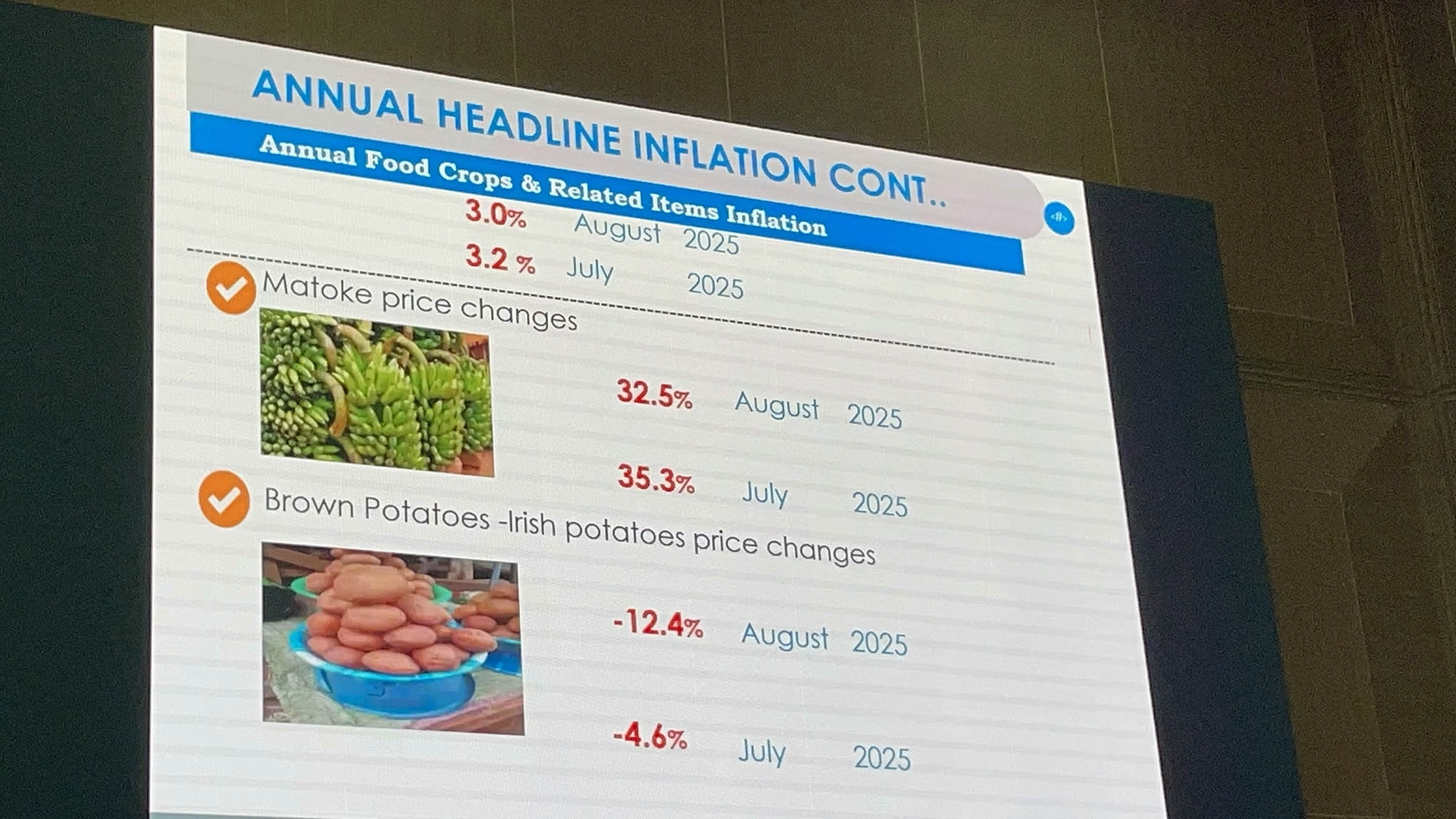
Aliziki .K. Lubega the director Economic statistics at UBOS, explained that food crops and related items registered a 3.0 percent inflation rate in August, largely driven by specific commodities. Irish potatoes recorded a sharp fall in prices, with inflation at -12.4 percent, down from -4.6 percent in July. Matoke remained high, with a rate of 35.5 percent, almost unchanged from 35.3 percent in July. Passion fruits dropped significantly, to -6.1 percent from 14.5 percent in July. Mangoes and fresh beans also registered declines, at -6.1 percent and -12.9 percent respectively.
Inflation in energy, fuels, and utilities rose slightly to 1.1 percent in August, up from 0.0 percent in July. Ms Aliziki attributed the increase mainly to a rise in charcoal prices, which jumped by 8.3 percent compared to 5.5 percent in July.
Petroleum products, however, showed mixed movements. Petrol prices registered a -4.0 percent change in August compared to a 6.2 percent increase in July, while diesel recorded a smaller decline of -2.0 percent, up from -3.4 percent the previous month.
The UBOS report indicates that while Uganda’s overall inflation remains stable, price dynamics across sectors continue to reflect the volatility of food and energy items, which play a significant role in household expenditure.